Configuration Guide
After installation, configure the application in this order: general identity, branding, channels, security, CRM defaults, and portal controls. This sequence prevents half-configured deployments and gives buyers a reliable first-run path.
General -> Branding -> Channels -> Security -> Sessions -> CRM demo/sample data.
The product should be usable without Redis, S3, or third-party APIs. Enable integrations only after baseline admin setup is complete.
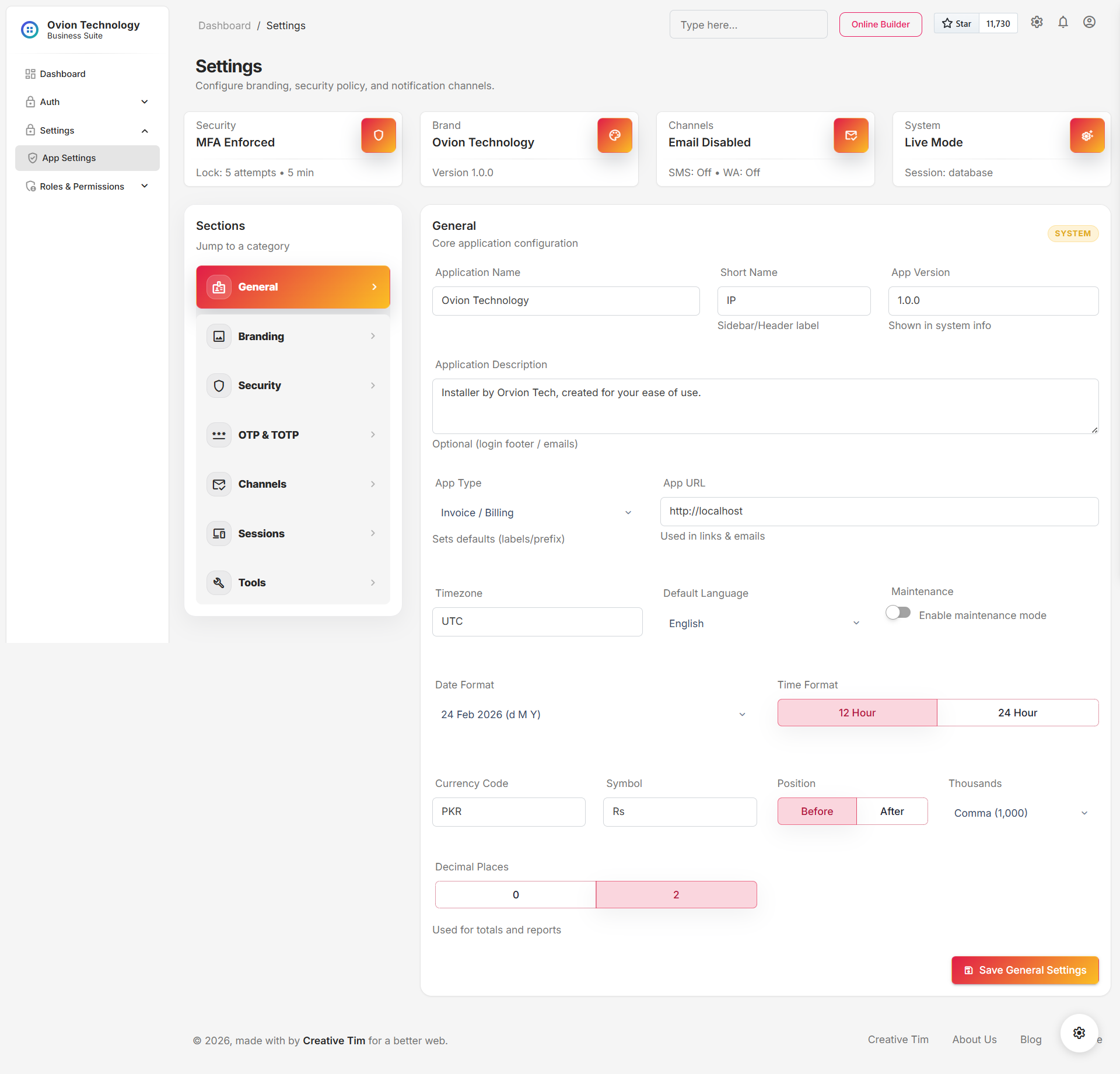
1) General Configuration
Set application name, short name, version label, app URL, timezone, locale, currency, and formatting first. These values affect emails, reports, dashboard totals, and generated links.
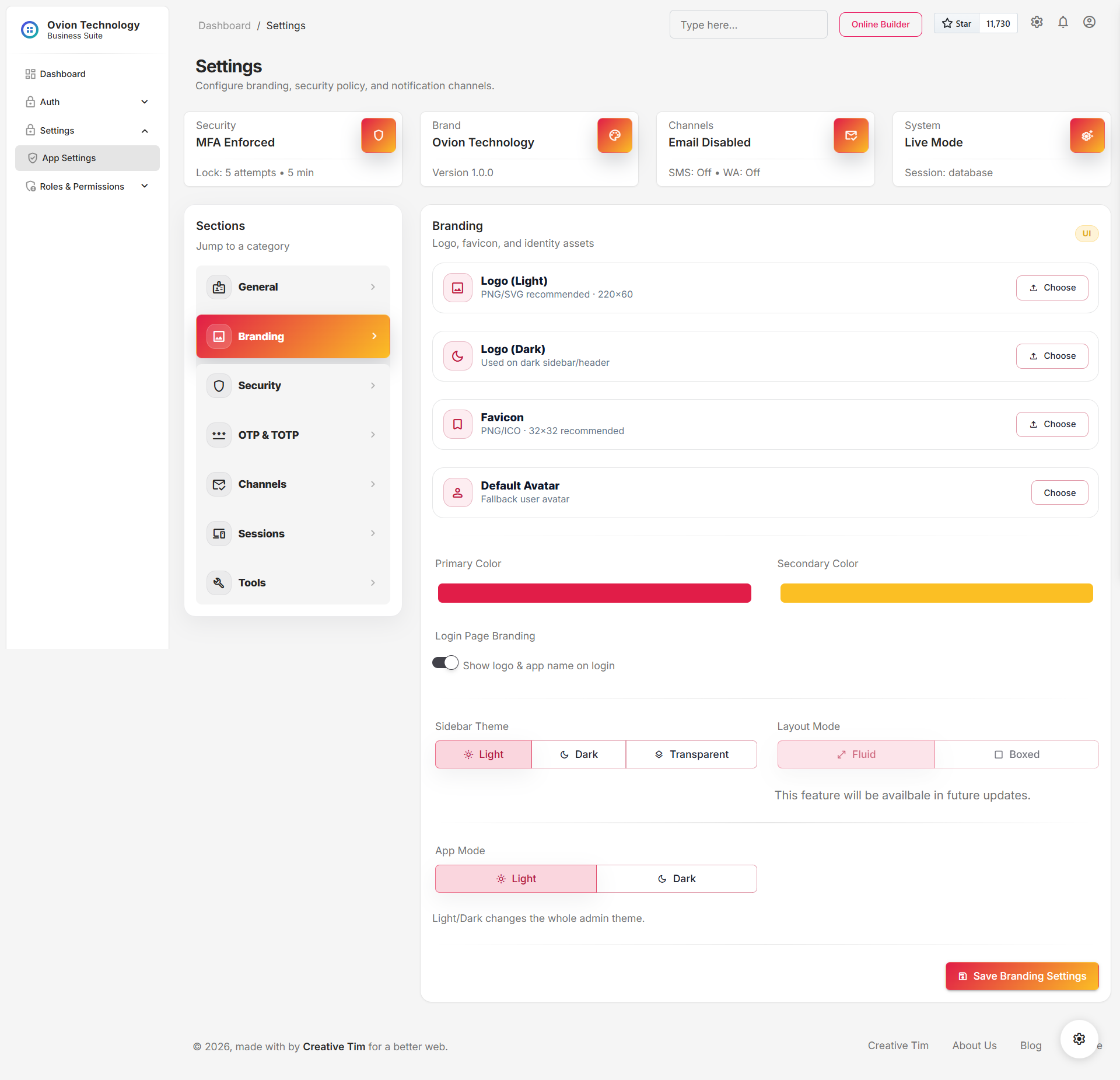
2) Branding
Upload logo variants, favicon, and default avatars. Confirm primary and secondary colors, sidebar theme, light/dark mode defaults, and login branding. RevenuePilot CRM should ship with Ovion branding by default, but the white-label flow must be usable by buyers.
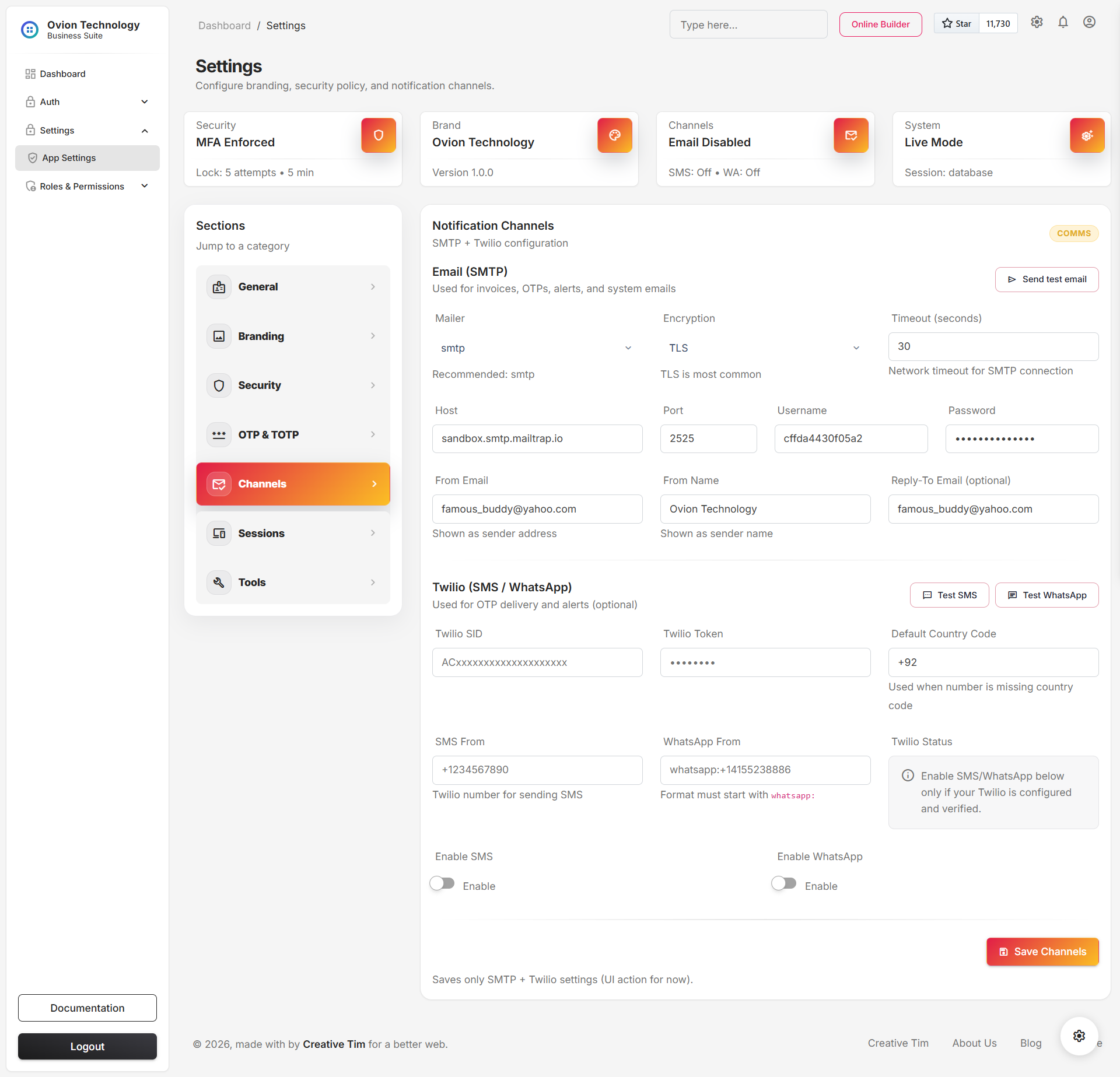
3) Mail, SMS, and WhatsApp
Configure SMTP first. If OTP, alerts, portal invitations, or scheduled report delivery are enabled, mail must work before go-live. SMS and WhatsApp should remain optional but documented.
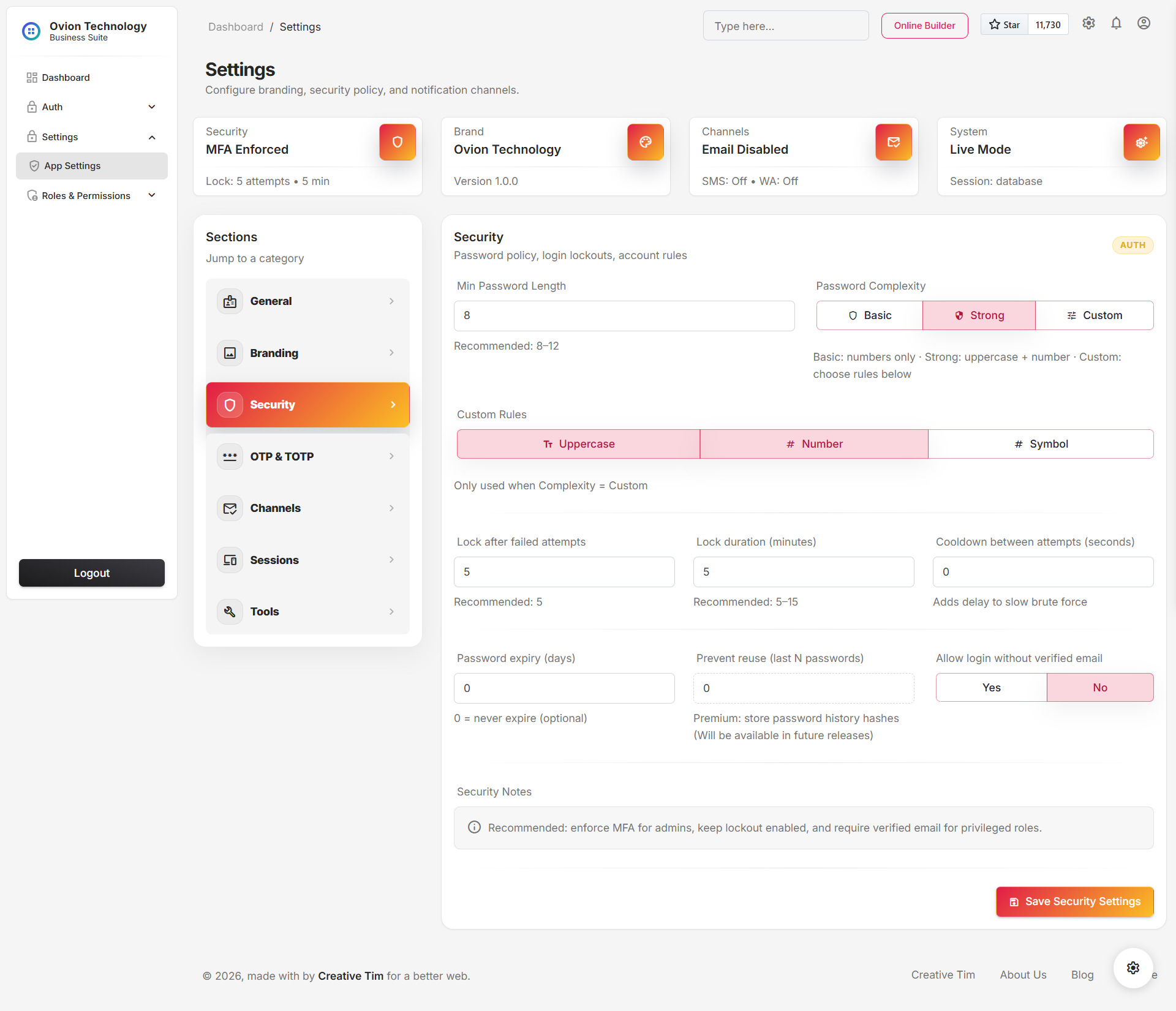
4) Security And Sessions
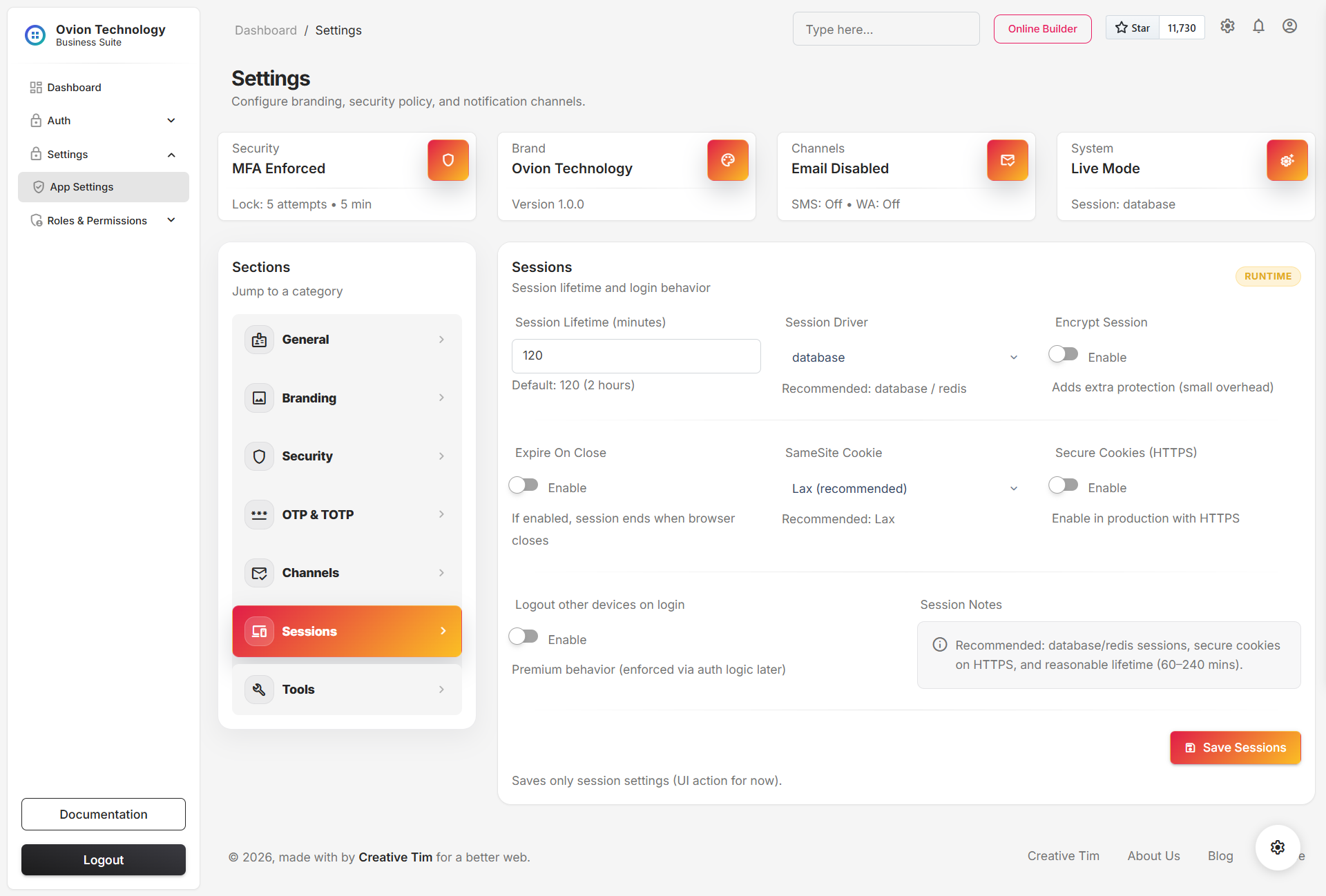
Review password policy, OTP/TOTP settings, session lifetime, secure cookies, same-site, and device/session management. Production deployments should verify lockout behavior and OTP delivery before launch.
5) CRM Baseline
- Confirm the default pipeline and stage probabilities.
- Assign playbooks to core pipelines and decide which stages require checklist proof before movement.
- Review permissions for Admin, Manager, Agent, and portal roles before exposing quotes, invoices, files, requests, and tickets.
- Decide whether to load demo data, essential data, or full flagship starter data.
- Verify portal branding and invoice/quotation PDF themes before buyer demos.
- Configure company, contact, lead, deal, quotation, invoice, project, task, support, and report saved views that your team will use daily.
6) Integrations And Operations
- Realtime: configure Laravel Reverb only when the Reverb server and broadcast credentials are ready; otherwise keep the default log broadcaster and describe chat as configuration-ready.
- Accounting: keep QuickBooks and Xero live sync disabled until OAuth, token refresh, customer, invoice, payment, and reconciliation evidence exists. Use
php artisan crm:sync-accounting-providersfor sandbox/configuration proof. - Mailbox: use mailbox simulation/configure-later by default. For production import, configure IMAP/OAuth, TLS/SSL, port, username, credential storage, then run
php artisan crm:sync-support-mailboxes. - Payments: configure Stripe, PayPal, Mollie, Authorize.Net, or manual gateways in sandbox first. Keep live API calls disabled until the gateway config is active and webhook replay is proven.
- Ads and providers: keep ad publishing and mutation switches disabled until provider scopes, safety policies, offline conversion uploads, and tracking checks are proven.
- AI Bot: enter the AI Bot license/token in Settings, configure webhook token and signature secret, then verify lead, deal, and support ticket linking before enabling auto-create actions.
- Public API: create API clients, rate limit expectations, and outbound webhook endpoints from enterprise/settings screens before sharing
/api/crm/v1access. - Mobile: use the installable PWA and responsive portal/staff screens for mobile proof. Native Android/iOS binaries are not included in v1.0.0.
7) Platform Health Checks
crm:portal-readiness-checkcrm:sync-support-mailboxescrm:sync-payment-gatewayscrm:retry-payment-eventscrm:run-recurring-billing
- System Health readiness status
- Portal access and role permissions
- Webhook delivery/replay records
- Queued report exports and scheduled report toggles
- Backup creation, verify, rehearse, and restore notes